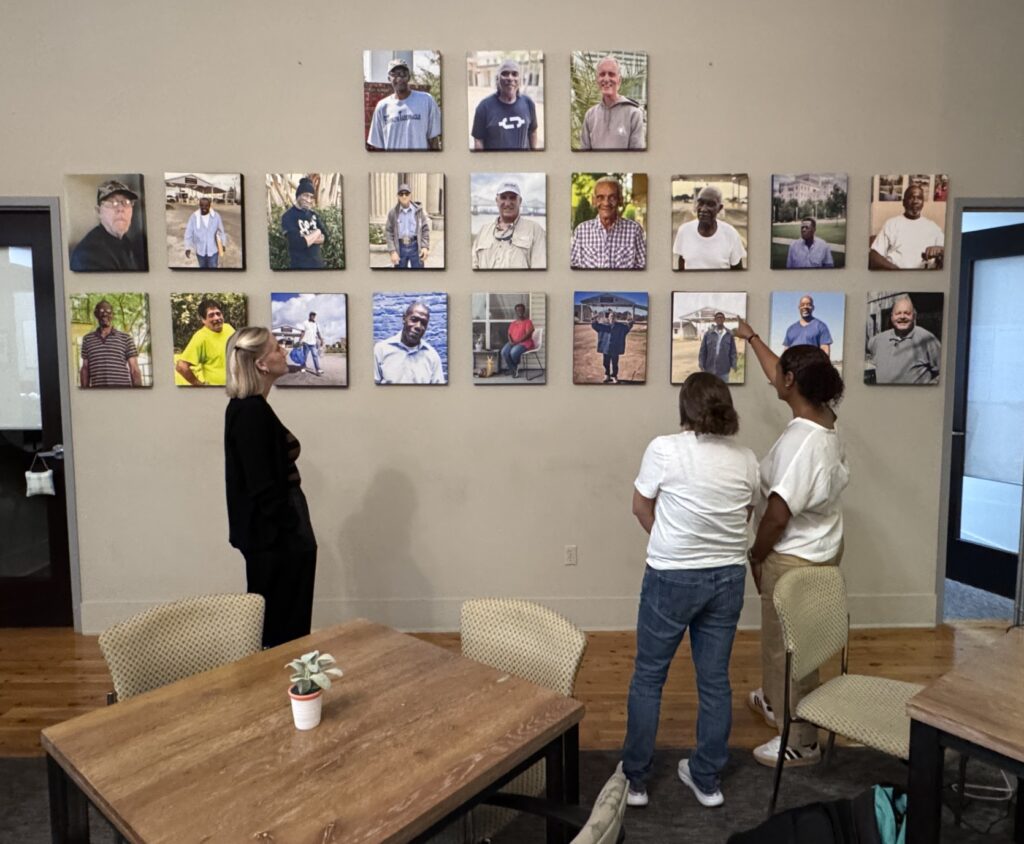
Inside Parole Project’s main office, a quiet wall speaks volumes.
Twenty-one portraits – printed on 16-by-20 canvases and arranged in three solemn rows – form a gallery of lives once reclaimed, then lost again. Staff lovingly call it the “Dearly Departed Wall,” but it’s more than a memorial, it’s a reminder to all who walk by that it’s not how long we live, but how fully.
“There is an inconvenient truth in our work,” said Andrew Hundley, executive director of Parole Project. “And that is that so many of our clients have been in prison so long that when they come home, they have very little time left on this earth.”
At the top of the wall, a man in a navy blue T-shirt smiles warmly into the lens. His name is Moses. Incarcerated at 17, he spent 42 years behind bars before being paroled in 2023. He died in August, shortly before his 62nd birthday. Friends remember him as cheerful, grounded, and generous.
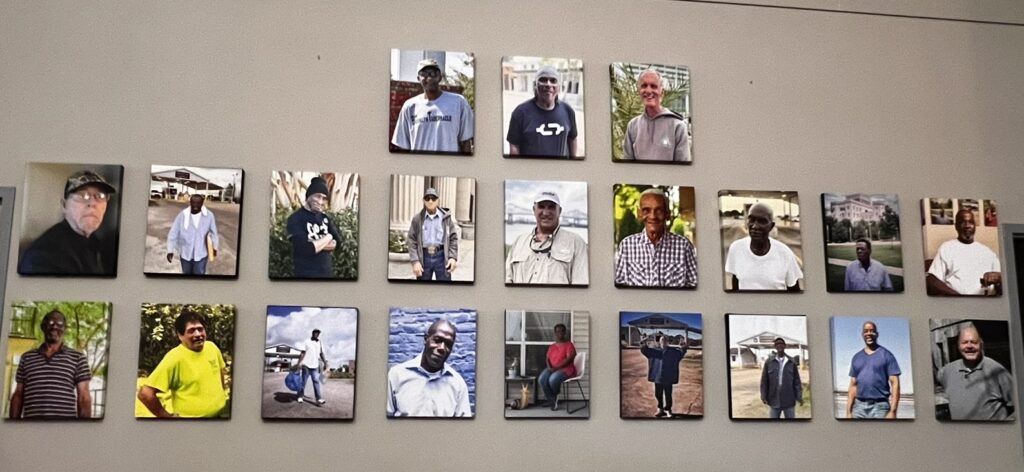
“He was positive and upbeat, just a happy-go-lucky guy,” said Jonathan Hersman, a longtime friend of Moses who also works as a reentry specialist for Parole Project. “When he got out, he got a job, a car, his own apartment. He made the most of his time.”
Nick, also 62, shared a similar path. Legally blind and managing dialysis and diabetes, he spent 42 years in prison before his release. He passed away in June, two years after coming home.
“He was joyful and generous,” said Kenneth, a fellow client. “When he gave you something, he didn’t expect it back. He just wanted to give.”
Since 2016, Parole Project has supported the second chances of more than 645 men and women. Nearly one-third are 65 or older, an age that signals both eligibility for Medicare and the beginning of life’s final chapter. For those who’ve spent decades inside, reentry is not just a fresh start – it’s a collision of aging and adaptation. Many describe the experience as a “Rip Van Winkle effect,” stepping into a world transformed by technology and pace.
“Technology is one of the biggest hurdles,” said Aaron Houser, a former reentry staff member and Parole Project client. “It’s hard to come out and suddenly be expected to navigate the digital world.”
Donnie, 75, was sentenced to life without parole at 17 and spent 56 years in prison before his release in 2023. He died in August, but not before making the most of every moment. He was curious and always up for something new, said Emerson, his friend and Parole Project client.
“When he got paroled, I went and picked him up and brought him home to eat dinner and play the Oculus,” Emerson said. “He looked like a dinosaur playing something new. It was funny, but he was always down for the next adventure. Everything Donnie did in his mind was maybe the last big fun he was going to have so he made the most of it.”
Savoring each moment, whether it was owning a car, leaning into generosity, or trying to understand changing technology, many Parole Project clients returning home have embraced life with a quiet urgency.
“Though their time home was too brief, they were able to walk in freedom, surrounded by friends and family who loved them,” Hundley said. “They did not die behind prison walls, but they lived, they loved, and they were cherished until the very end.”