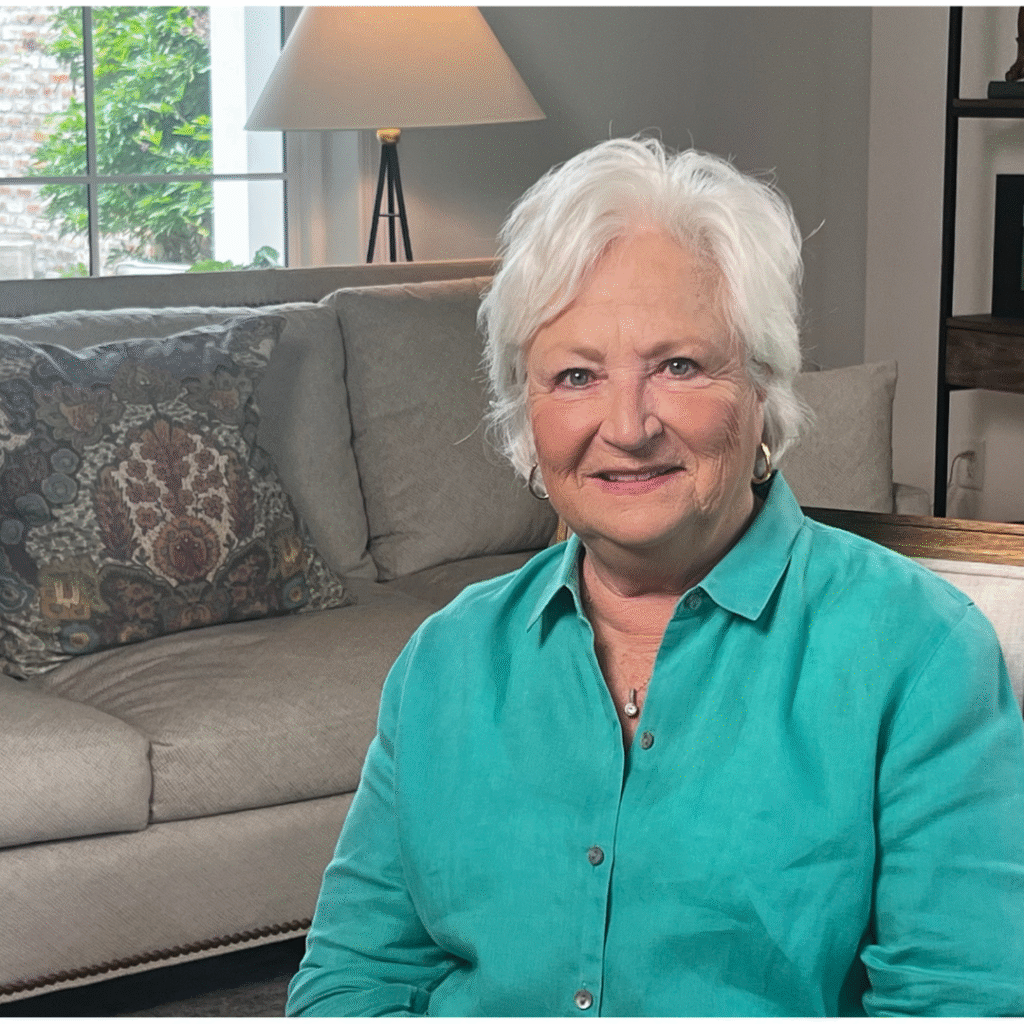
Mary Livers has spent more than four decades reshaping the field of corrections, and she’s accumulated a long list of titles along the way. But for her, titles were never the point, they were simply tools that allowed her to have a voice, to lead with integrity, and to improve both systems and the people inside them.
Livers is a courageous truth teller, a defender of the underdog, a voice for the unheard, and over the last four decades of her career, she has disrupted systems in the best way possible.
“If something doesn’t feel right, I stand up and say something,” she said. “I’ve been that way since high school.”
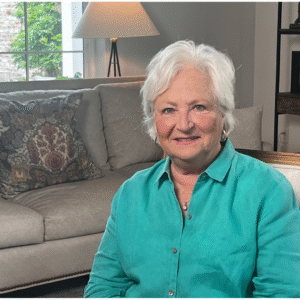
She shares her story from her south Baton Rouge home office, settling back into her white, plush office chair – gray Bomba socks crossed at the ankles on the desk’s crossbar, a red headband sweeping her silver hair away from her face. Outside her window, a crisp winter sun spills across her desk as she reflects on a 45‑year career that has taken her across four states and through nearly every corner of adult and juvenile corrections, including a 10-year stint on Parole Project’s Board of Directors.
“That’s my nature,” she said. “When you see something and feel like you can make a difference, you have to do something – even if it ruffles some feathers.”
That instinct has guided her since childhood. Livers grew up in Shreveport, an athletic middle‑class kid who – as a seventh grader – practiced tennis with varsity players. She was popular, a class clown and disruptive – so much so that she was the only student assigned a designated seat in every class: front row, center.
“I always found humor in everything,” she said. “But I also had this moral thing about fairness. My dad drilled that into us – don’t pick on kids who can’t defend themselves, never throw the first punch. He taught me how to stand up for myself, even as a little girl he knew that I would need a little extra edge. I had a strong sense for wanting to do the right thing.”
She never set out to work in corrections. After earning her master’s degree in social work from LSU in the 70s, she accepted an internship with the Arkansas Department of Corrections – an agency in the process of major reform.
“People always ask me how I got involved in corrections,” she said. “It was by accident. I trusted the path and had good mentors. But I was reform minded and knew that reform meant a path to something better.”
Her supervisors quickly discovered that she was a gifted writer and researcher but also saw something in her that she didn’t see in herself, and her path shifted. She rose through the ranks, eventually moving to Pine Bluff to work in a women’s prison.
“We called it ‘Pinay Bloof’ to make it sound better,” she said, laughing. “It was in the middle of nowhere, but it was so progressive. Cottage‑like. Bright windows, shared bathrooms, no big walls or razor wire. You didn’t feel like you were walking into a prison.”
It was there she solidified her belief that people are not defined by their worst moment and that a criminal conviction doesn’t define a life.
“I really thought, people can change. They do the best they can,” she said. “Some people have an easier path than others. People who come into conflict with the law, that doesn’t define their paths.”
Her career has spanned Arkansas, Oklahoma, Maryland, and Louisiana in both women’s and men’s prisons. She served as Director of Research and Evaluation, Assistant Warden, Deputy Warden, Director of Classification and Programs, Warden, Deputy Director of Community Corrections, Chief of Staff, Associate Director, and ultimately Deputy Secretary of Louisiana’s Office of Juvenile Justice for nearly eight years. She later became the 104th President of the American Correctional Association and the founding president of the Association of Women Executives in Corrections.
Her accolades are many – including being inducted into the Louisiana Criminal Justice Hall of Fame and the prestigious E.R. Cass Award, the highest award given to someone within the membership of the American Correctional Association – but she doesn’t mention awards. She is more interested in the work than the recognition. During the interview, she occasionally reaches for old notes she found when she was packing boxes to move: a farewell speech she gave when leaving Oklahoma after nearly 20 years, and a blue‑bound 10‑year master plan she wrote as a young LSU graduate working for the Arkansas Department of Corrections. When asked why she kept it so long, her answer is immediate.
“It’s meaningful to me,” she said. “It built me. It’s my bones and I’m proud of it.”
Nearly 10 years ago at a conference in Washington, D.C., she met Andrew Hundley, executive director of the emerging nonprofit, Louisiana Parole Project. With her decades of experience and reputation for doing the right thing no matter the cost, she recognized something in him – something she wanted to support. In 2016, she joined the board of Parole Project, alongside co‑founders and attorneys, Bob Lancaster and Keith Nordyke, and she has been an asset ever since.
“Mary has been an extraordinary gift to our organization. She has been a steady voice of reason and deeply committed to our mission from the very beginning,” Hundley said. “Her belief in evidence-driven practices has shaped Parole Project in ways that will last long after her service on our board.”
These days, Livers splits her time between teaching, consulting, and mentoring in correctional and academic spaces nationwide. When she’s not working, she and her partner are happiest traveling or out on a golf course together. But beneath all of that, she is still unmistakably herself – a trailblazer, a leader by instinct and a fierce advocate for those without a voice.